
To start a digital marketing agency from scratch, pick a niche and one core service, set up the business legally, build a simple offer with clear pricing, land your first few clients through your network and direct outreach, and put basic systems in place so you can deliver consistently. You don’t need an office or a big team to begin, but you do need focus.
This guide walks through how to start a digital marketing agency step by step, including how to start with no experience, what tools you actually need, and the mistakes that slow most new agency owners down.
How to Start a Digital Marketing Agency in 9 Steps
- Choose a niche and one core service.
- Build skills and proof before you sell.
- Register the business and handle the basics.
- Package your offer and set pricing.
- Build a simple website and profiles.
- Get your first clients.
- Set up onboarding and delivery systems.
- Report results clearly.
- Grow with referrals, retainers and hiring.
Step 1: Choose a niche and one core service
“We do all marketing for everyone” is hard to sell. A narrow focus — for example, Google Ads for roofers, SEO for dentists, or social media for local restaurants — makes your message clearer, your work repeatable and your referrals stronger. Start with one service you can deliver well; add more later.
Step 2: Build skills and proof before you sell
If you’re starting with no experience, practice on your own projects first: build and rank a small site, run a tiny ad budget for a friend’s business, or manage social accounts for a local nonprofit. Document what you did and what you learned. Honest, specific process write-ups build trust without inflated claims.
Free learning resources from the platforms themselves are a good start. Google’s own guidance on hiring an SEO is also worth reading, because it shows what clients should expect from an agency — and what red flags to avoid.
Step 3: Register the business and handle the basics
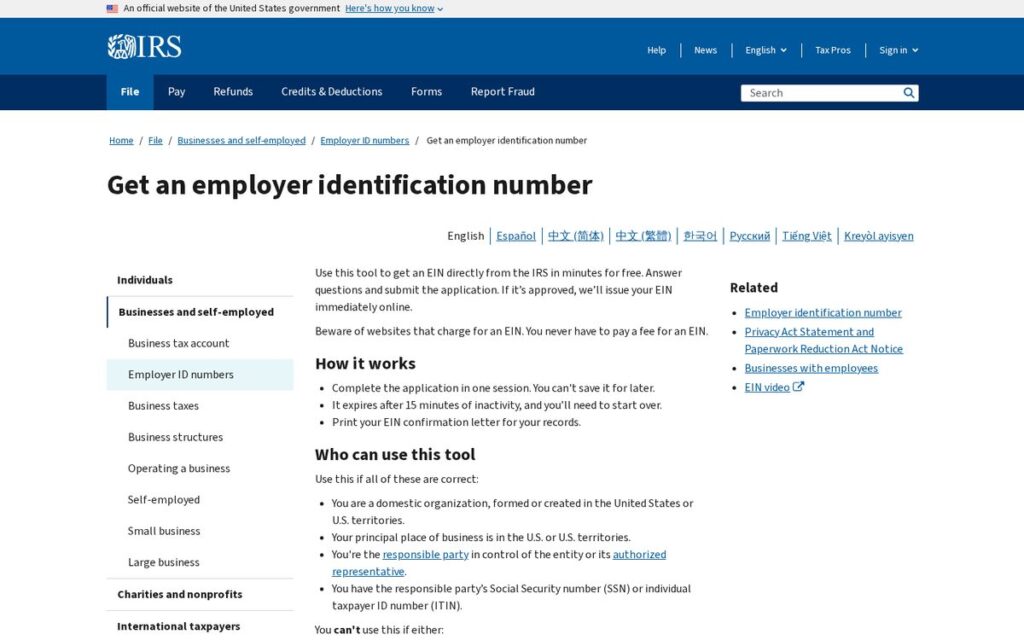
Choose a business structure, register your business name, open a business bank account and get an EIN. The SBA’s launch your business guide covers structures and registration. The IRS lets you get an EIN directly from the IRS online for free, and it warns that you never have to pay a fee for an EIN.
You’ll also want a simple service agreement, an invoicing tool, and, depending on your state and services, business insurance. Talk to an accountant or attorney for advice specific to you.
Step 4: Package your offer and set pricing
Clients buy outcomes and clarity, not hours. Package your service into one or two clear offers with a defined scope, deliverables and monthly price. Common models are monthly retainers, one-time projects and setup fee plus retainer. Write down exactly what is and isn’t included to avoid scope creep.
Step 5: Build a simple website and profiles
Your site needs a clear headline about who you help, your service, how the process works, and a way to book a call. Add a Google Business Profile if you serve local clients and a LinkedIn profile that matches your niche. Keep it simple and fast; you can expand it once clients come in. If you need a starting point, our Google SEO guide for 2026 covers the basics of getting found.
Step 6: Get your first clients
Your first clients usually come from people who already know you. Tell your network exactly who you help, then add direct outreach to businesses in your niche: a short, personalized email or LinkedIn message that points out one specific opportunity. Local networking groups, partnerships with web designers or accountants, and helpful content all add up.
Step 7: Set up onboarding and delivery systems
A repeatable process is what lets a one-person agency grow. Create a standard onboarding checklist (access, goals, brand assets, kickoff call), templates for recurring work, and a calendar for deliverables. A CRM keeps leads, conversations and tasks in one place instead of scattered across your inbox.
Step 8: Report results clearly
Send a short monthly report: what you did, what changed, and what’s next. Focus on the metrics that matter to the client — calls, leads, booked jobs — and explain the numbers in plain language.
Step 9: Grow with referrals, retainers and hiring
Once you have a few happy clients, ask for referrals and reviews. Move project clients onto retainers where it makes sense. When you’re at capacity, hire contractors for delivery tasks first, so you can focus on sales and client relationships.
What You Need to Start a Digital Marketing Agency
You can start lean. Here is a practical starter stack:
| Need | What it does | Examples |
|---|---|---|
| Business setup | Legal entity, EIN, bank account | SBA guides, IRS EIN tool |
| Website | Credibility and lead capture | WordPress or a page builder |
| CRM and pipeline | Track leads, follow-ups and clients | HighLevel, HubSpot |
| Booking and reminders | Let prospects book calls | Calendar built into your CRM |
| SEO and research | Keyword and competitor research | Semrush, Google Search Console |
| Reporting | Monthly client reports | Looker Studio, built-in dashboards |
| Contracts and invoicing | Agreements and payments | E-signature and invoicing tools |
Using HighLevel to Run a New Agency
Many new agencies use an all-in-one platform so they aren’t paying for and connecting a dozen separate tools. HighLevel (often searched as GoHighLevel) combines a CRM and pipelines, website and funnel builder, email and SMS marketing, booking calendars, workflow automation, reputation management and more, according to its official pricing page.
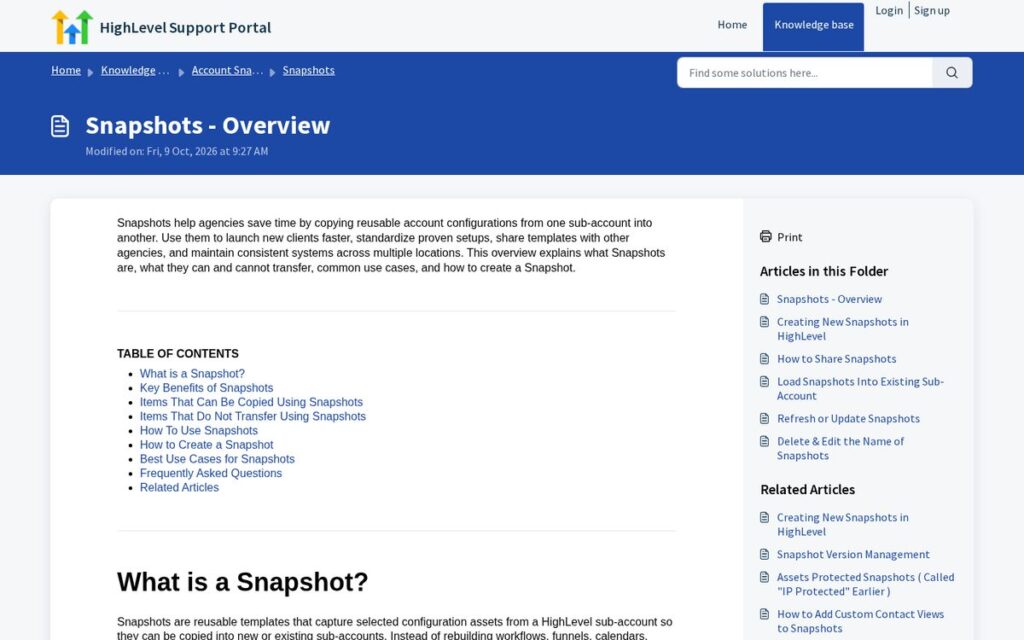
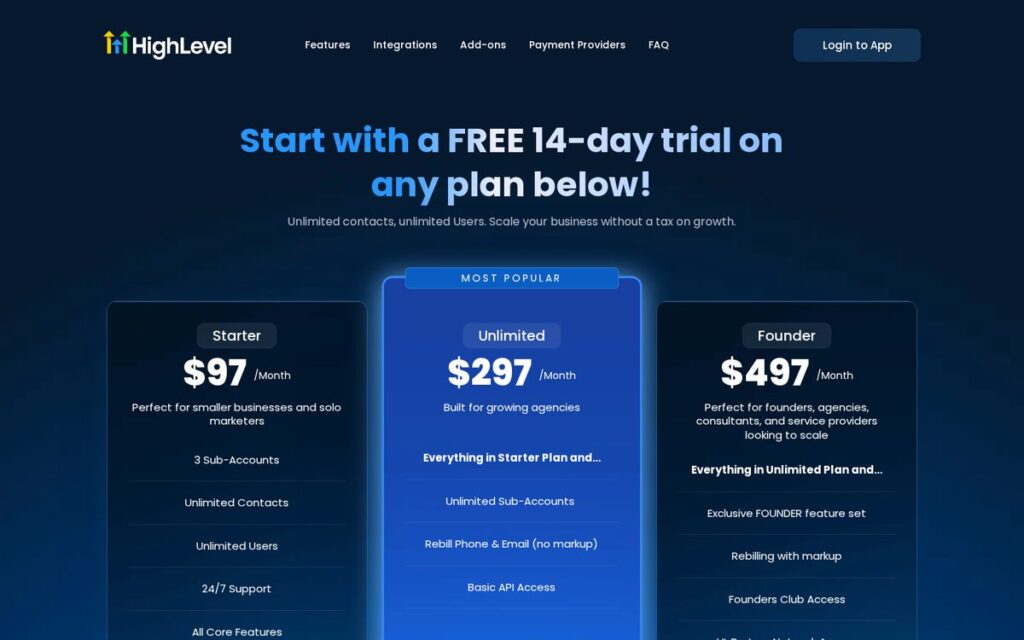
For agencies, two features stand out. Sub-accounts let you manage each client separately, and Snapshots let you copy a proven setup — workflows, funnels, calendars, forms and dashboards — from one sub-account into another, so new client launches are faster and more consistent.
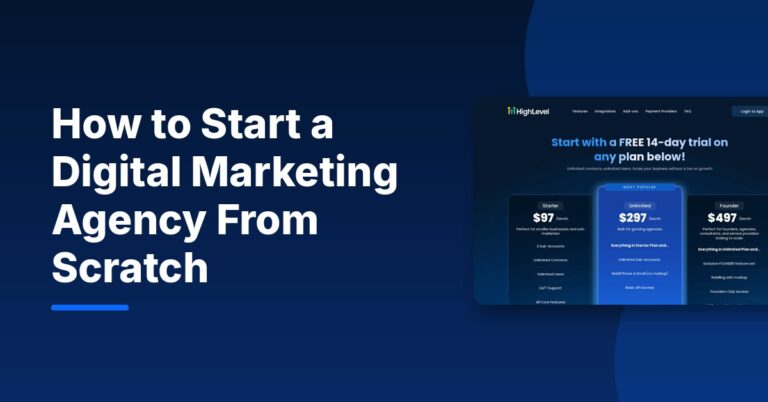
As of November 2026, HighLevel’s pricing page lists a 14-day free trial and three plans: Starter at $97/month (3 sub-accounts), Unlimited at $297/month (unlimited sub-accounts) and Founder at $497/month. Usage-based charges apply for SMS, calls, email and AI. Prices change; check the official pricing page.
Affiliate link — we may earn a commission.
Results vary, and the platform is a tool, not a business plan. For a deeper look, read our HighLevel review or the GHL vs HubSpot comparison.
Common Mistakes When Starting an Agency
- Offering everything: too many services make it hard to deliver well and hard to market.
- Underpricing: low prices attract demanding clients and leave no room to hire.
- No contract: always define scope, payment terms and how either side can end the agreement.
- Promising results you can’t control: Google itself warns against anyone who claims a #1 ranking.
- Skipping systems: without onboarding and reporting templates, every new client feels like starting over.
Related guides
- How Much Do Digital Marketing Agencies Charge Per Month?
- How to Get Clients for a Digital Marketing Agency
- Systeme.io Review 2026: Features, Pricing, Pros, and Cons
- Client Onboarding Checklist for Marketing Agencies (Free Template)
How to Start a Digital Marketing Agency FAQ
What do I need to start a digital marketing agency?
A clear niche and service, a registered business with an EIN and bank account, a simple website, a contract template, a CRM to track leads, and a way to find your first clients. Skills come first; tools come second.
Can you start a digital marketing agency with no experience?
You can, but build skills and proof first. Practice on your own projects or with a few low-risk clients, document your process honestly, and be clear about what you can and can’t do.
What is the 3-3-3 rule for marketing?
There isn’t one official definition. Marketers use it for different simple frameworks, such as focusing on three audiences, three messages and three channels at a time. The useful idea behind it is focus: do fewer things well.
Is AI replacing digital marketing?
AI tools help automate tasks like drafting copy, summarizing data and supporting follow-up, but businesses still need strategy, judgment and accountability. Agencies that use AI to work faster while keeping humans in charge of decisions tend to be in a stronger position.
Get Help Building Your Marketing Engine
Starting an agency or growing your own business’s marketing? get a free marketing audit from ScaleMyClick and see where your biggest opportunities are. We also offer SEO services and Google Ads management.