
The best cold email templates are short, specific and about the reader: one clear reason you are writing, one useful idea, and one easy question to answer. Below are 10 cold email templates small businesses and agencies can adapt for prospecting, partnerships, referrals and follow-ups, plus the rules that keep cold outreach legal and out of the spam folder.
Words in square brackets, like [First name] or [Company], are merge fields. Replace them with real details for each person. The more specific you make that line, the more the email reads like it was written for one person, because it was.
What Makes Cold Email Templates Work
Templates fail when they read like templates. The ones that get replies usually share a few traits:
- A relevant opening. Mention something real about their business: a new location, a hiring post, a review, a page on their site.
- One problem, one idea. Do not list every service you offer.
- Short length. A few sentences the reader can finish on a phone.
- A low-effort ask. “Worth a quick chat?” is easier to answer than “Book 45 minutes on my calendar.”
- A plain-text feel. Few links, no heavy images, no attachments in the first email.
10 Cold Email Templates for Small Businesses
1. The local observation
Subject: Quick idea for [Company]
Hi [First name], I noticed [specific observation, for example: your Google Business Profile doesn’t show weekend hours]. Small fixes like that can affect how many people call from Maps. I put together two other quick ideas for [Company]. Want me to send them over?
[Your name]
2. The problem-first opener
Subject: [Problem] at [Company]?
Hi [First name], a lot of [industry] owners tell us their biggest headache is [problem, such as leads going cold after hours]. If that’s true for [Company] too, we have a simple way to [outcome] without adding staff. Is this on your list for this quarter?
3. The referral or mutual connection
Subject: [Mutual contact] suggested I reach out
Hi [First name], [Mutual contact] mentioned you’re working on [goal]. We help [type of business] with [service], and they thought it might be useful to compare notes. Open to a 15-minute call next week?
4. The content share
Subject: Thought this might help with [topic]
Hi [First name], I saw your post about [topic]. We just published a short checklist on [related topic] that answers the question you raised. Happy to send it. No pitch attached.
5. The partnership pitch
Subject: Partnership idea: [Company] + [Your company]
Hi [First name], our customers often ask us for [their service]. You serve the same [audience] we do, so a referral partnership could make sense for both of us. Would you be open to a short call to see if there’s a fit?
6. The before/after offer
Subject: A free [deliverable] for [Company]
Hi [First name], I made a quick [audit/mockup/plan] showing how [specific page or channel] could be clearer for new customers. It took 20 minutes and it’s yours either way. Want me to send the link?
7. The event or trigger email
Subject: Congrats on [event]
Hi [First name], congrats on [opening a new location / launching X]. Growth like that usually means [related challenge]. We help businesses like yours handle that with [service]. Worth a quick conversation?
8. The question-only email
Subject: Quick question
Hi [First name], who handles [area, such as online ads or website updates] at [Company]? I have an idea I’d like to run past the right person.
9. The polite follow-up
Subject: Re: [original subject]
Hi [First name], bumping this up in case it got buried. If [topic] isn’t a priority right now, no problem, just let me know and I won’t follow up again.
10. The breakup email
Subject: Should I close your file?
Hi [First name], I haven’t heard back, so I’ll assume the timing isn’t right. If [problem] becomes a priority later, reply here anytime. Wishing you a strong [season/quarter].
How to Personalize Cold Email Templates at Scale
Personalization does not have to mean writing every email from scratch. A practical approach for small teams:
- Group your list into small segments by industry, city or trigger (new location, hiring, recent review).
- Write one template per segment, so the problem and example already fit.
- Add one custom first line per contact based on something you actually saw.
- Keep a follow-up sequence of two to three messages, spaced a few business days apart.
- Remove anyone who replies, bounces or asks you to stop.
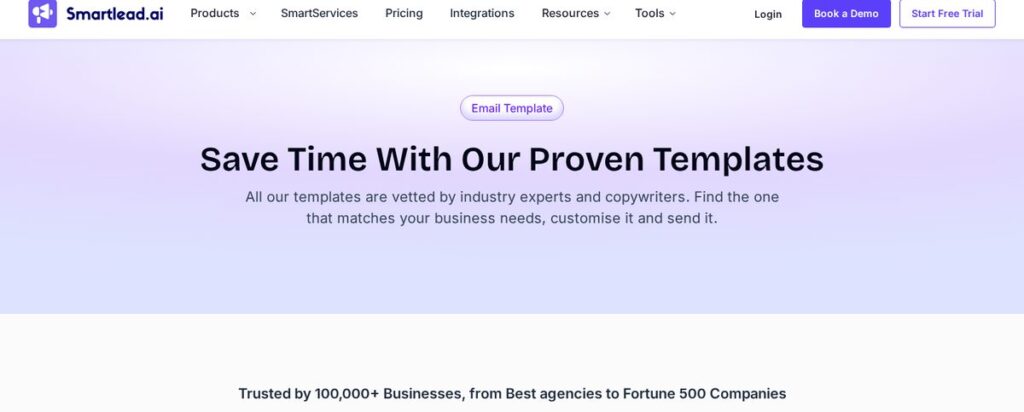
Cold email platforms can automate the sequencing, sending limits and reply tracking. Smartlead, for example, publishes a library of email templates on its site that you can customize, and its paid plans handle multi-mailbox sending, warmup and a unified inbox for replies.
Affiliate link — we may earn a commission.
Smartlead plans start at $39/month on monthly billing as of November 2026, with yearly billing priced lower. Prices change; check the official Smartlead pricing page.
Cold Email Rules: CAN-SPAM Basics
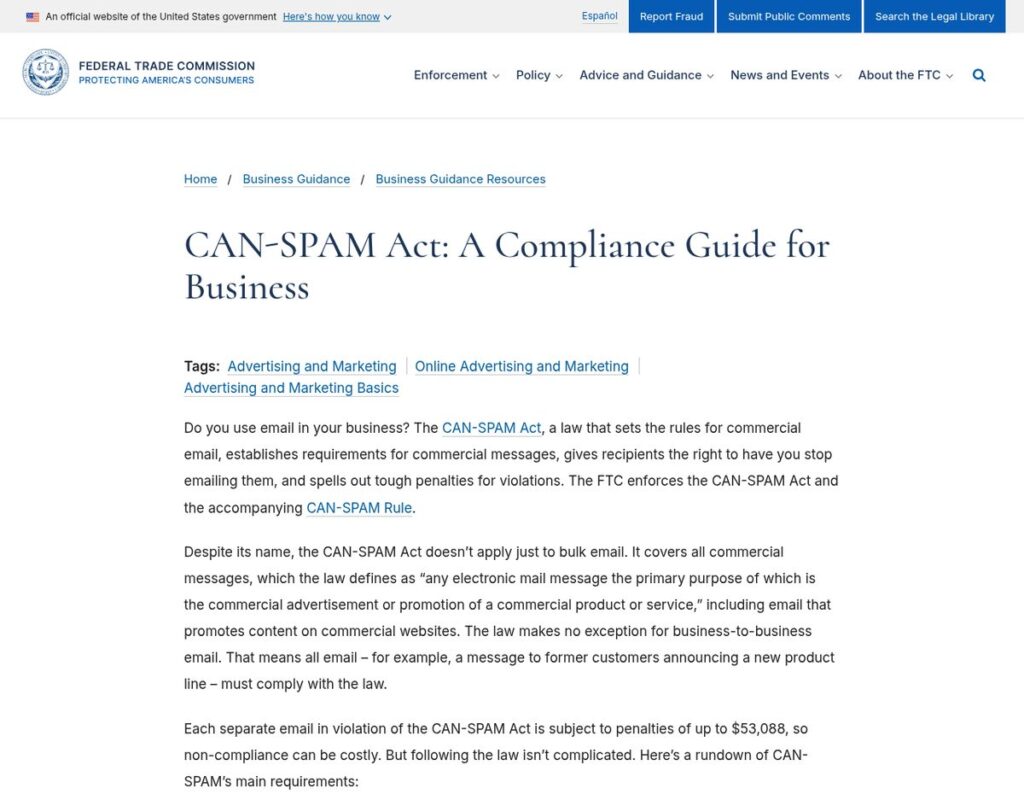
Cold email is legal in the United States when you follow the CAN-SPAM Act. The FTC’s CAN-SPAM compliance guide lists the main requirements, including:
- Accurate “From,” “To” and “Reply-To” information that identifies you or your business.
- A subject line that reflects what the email is about.
- Disclosure that the message is an advertisement, when it is one.
- Your valid physical postal address.
- A clear way to opt out of future emails, and honoring opt-out requests within 10 business days.
The FTC notes that each separate email in violation of the law is subject to penalties of up to $53,088, so it is worth getting right. This is not legal advice; check the FTC guide or a lawyer for your situation.
Deliverability rules matter too. Before you send, make sure your domain is authenticated and warmed up. Google’s sender guidelines require SPF or DKIM for all senders and ask everyone to keep spam complaints low.
| Element | Do | Avoid |
|---|---|---|
| Subject line | Short, specific, honest | ALL CAPS, fake “Re:” on a first email |
| Opening | A real observation about them | “Hope this finds you well” |
| Body | One problem, one idea | A list of every service |
| Call to action | One easy question | Long calendar links in email one |
| Footer | Name, business address, opt-out line | No way to unsubscribe |
Related guides
- How to Get Clients for a Digital Marketing Agency
- B2B Lead Generation Strategies for Small Teams in 2026
- Best Cold Email Software in 2026: How to Choose
Cold Email Templates FAQ
Is cold emailing illegal in the USA?
No. Commercial email, including cold email, is allowed in the US as long as it follows the CAN-SPAM Act: honest headers and subject lines, a physical address, a clear opt-out and prompt handling of opt-out requests. This is not legal advice.
Are you allowed to send cold emails?
Yes, in the US, if you follow CAN-SPAM and the sending rules of mailbox providers like Gmail and Yahoo. Rules are different in other countries, so check local law before emailing people outside the US.
How do I write a cold email that gets a reply?
Keep it short, open with something specific about the reader, focus on one problem you can help with, and end with a simple yes-or-no question. Then follow up politely once or twice.
How many follow-ups should a cold email have?
Two or three follow-ups spaced a few business days apart is a common, respectful pattern. Stop as soon as someone replies or asks you not to contact them.
Turn Replies Into Customers
Good templates start conversations, but the follow-up system closes them. If you want help with lead capture, CRM follow-up or AI automation, get a free marketing audit from ScaleMyClick. You can also browse our list of the best digital marketing tools for small businesses.