
If you are wondering how to generate leads for small business growth, start with the channels where buyers already look for you: Google, referrals, and your own website. Then add one or two paid channels and a fast follow-up system so no inquiry goes cold. Below are 15 proven ways to get more leads, which ones cost nothing, and how to track what actually works.
Lead generation for small business is not about doing all 15 at once. Pick three that fit your customers and your budget, run them well for 90 days, and then add more.
What counts as a lead (and why it matters)
A lead is a person or company that has shown interest and given you a way to reach them: a call, a form fill, a booking, a direct message, or an email reply. A good lead also fits what you sell, where you sell it, and the budget your service needs.
Defining this up front keeps you honest. Ten form fills from people outside your service area are not ten leads. Write down what a qualified lead looks like for your business before you spend time or money on any channel.
How to generate leads for a small business: 15 proven ways
1. Complete and update your Google Business Profile
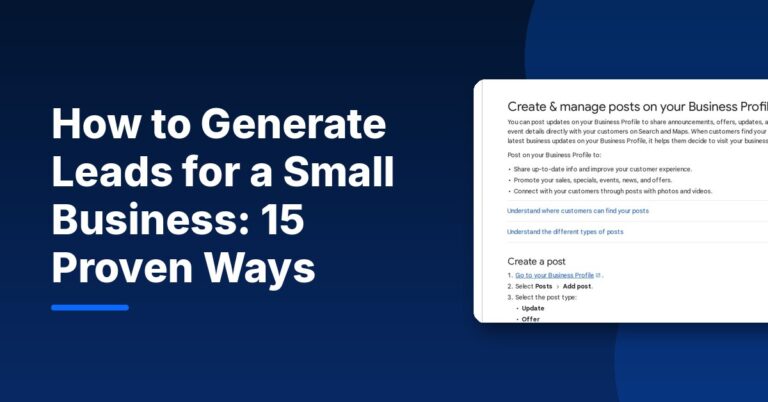
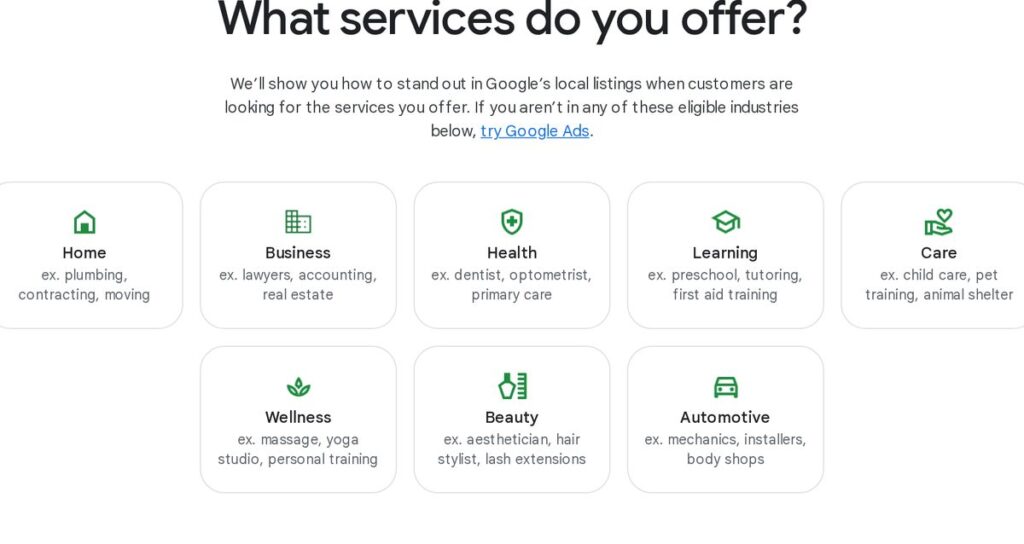
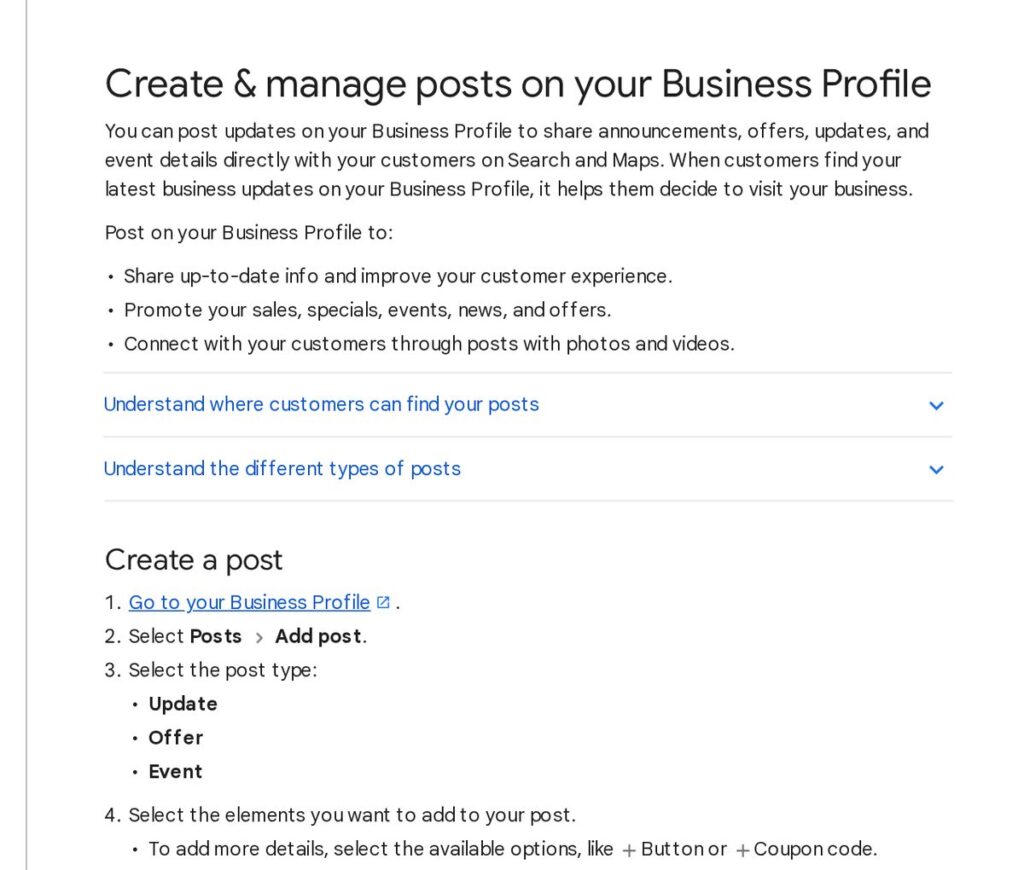
For local businesses, your Google Business Profile is often the first thing a buyer sees. Fill in every field: categories, services, hours, service area, photos, and a clear description. Google also lets you publish updates, offers, and events directly on your profile — see Google’s guide to creating and managing posts on your Business Profile.
2. Ask every happy customer for a review
Reviews help you show up and help you get chosen. Make asking a habit: send a short text or email with a direct review link after every finished job. Never offer payment or discounts in exchange for reviews.
3. Build one service page per service and location
A single “Services” page rarely ranks for anything. A dedicated page for each core service (and each main city you serve) gives Google something specific to match to searches like “roof repair in Tampa.” Our Google SEO guide for 2026 covers the on-page basics, and our SEO services page explains how we approach it for local businesses.
4. Run Google Search ads on high-intent keywords
Search ads put you in front of people actively looking for what you sell. Start narrow: a handful of “service + city” keywords, a tight location radius, and negative keywords to block job seekers and DIY searches. Send each ad group to a matching landing page, not your homepage. If you want help, see our Google Ads management service.
5. Try Local Services Ads if your category qualifies
Google’s Local Services Ads appear at the top of some local searches and are built for service businesses. Google says advertisers pay for leads rather than clicks, and eligible businesses can earn a Google Verified badge. Availability depends on your category and location, so check the page for your industry.
6. Offer a lead magnet
A lead magnet is something useful you give away in exchange for an email address or phone number: a checklist, a price guide, a quiz, a free estimate. It turns “just looking” visitors into people you can follow up with. Keep it specific to one problem your buyer has right now.
7. Give every offer its own landing page
A focused landing page with one headline, one offer, and one form converts more visitors than a busy homepage. Match the page to the ad or post that sent the visitor, keep the form short, and make the next step obvious.
8. Use Facebook and Instagram lead ads
Meta’s lead ads let people send you their details through a form inside Facebook or Instagram, without leaving the app. Meta explains how they work in its About lead ads with Instant Forms help article. The catch: these leads go cold fast, so connect the form to your CRM or inbox so someone follows up the same day.
9. Start a simple referral program
Your current customers know people like them. Ask directly, make it easy (a short text they can forward), and thank people who refer, whether or not the referral buys. Keep any reward legal and simple.
10. Partner with complementary businesses
A realtor and a home inspector, a gym and a nutrition coach, a web designer and an accountant: businesses that serve the same buyer at different moments can refer each other. Agree on how you will hand off leads and follow through every time.
11. Send a regular email newsletter
Email keeps you in front of past customers and leads who were not ready yet. One useful email a month — a tip, a seasonal reminder, a short story about a recent project — is enough to stay remembered.
12. Publish content that answers real questions
Write down every question customers ask on sales calls, then answer each one in a blog post, short video, or FAQ. This helps buyers trust you before they call, and it gives search engines pages to rank.
13. Show your work on social media
Before-and-after photos, short behind-the-scenes clips, and quick tips work for most local and service businesses. Post where your buyers actually spend time, and always include a clear way to book or ask a question. Our social media marketing page explains how we plan this for clients.
14. Network in person
Chamber of commerce events, trade associations, local business groups, and industry meetups still work, especially for B2B and high-ticket services. Go with a goal (three real conversations), follow up within a day, and connect on LinkedIn.
15. Follow up fast with a CRM and automation
Most small businesses do not have a lead problem as much as a follow-up problem. Calls go to voicemail, forms sit in an inbox, and nobody texts back. A CRM collects every lead in one place and can send an instant text or email reply, remind your team to call, and keep nudging people who have not booked.
HighLevel (often searched as GoHighLevel) is one all-in-one option that combines a CRM, forms, calendars, two-way texting and email, and workflow automation. As of November 2026, HighLevel’s pricing page lists a free 14-day trial and three plans: Starter at $97/month, Unlimited at $297/month, and Founder at $497/month. Usage-based charges (for example texts, calls, email, and some AI features) are billed on top, and prices change, so check the official pricing page before you sign up.
Affiliate link — we may earn a commission.
For a deeper look, read our HighLevel review.
How to generate business leads online for free
If budget is tight, focus on the free channels first:
- Google Business Profile, reviews, and profile posts
- Service and location pages on your website
- Helpful content and FAQs
- Social media posts and short videos
- Referrals and partnerships
- Email to past customers
- Answering questions in local groups and forums (without spamming links)
Free does not mean effortless. These channels trade money for time and consistency. Paid ads can speed things up once you know your offer and your follow-up process work.
How to choose the right lead generation channels
Use this quick comparison to pick your first three channels:
| Channel | Cost | Speed | Best for |
|---|---|---|---|
| Google Business Profile + reviews | Free | Medium | Local service businesses |
| SEO and content | Free to moderate | Slow | Long-term, steady leads |
| Google Search ads | Paid | Fast | High-intent services |
| Facebook / Instagram lead ads | Paid | Fast | Offers with broad appeal |
| Referrals and partners | Free | Medium | Trust-based services |
| Email newsletter | Low | Medium | Repeat and seasonal business |
How to track which lead sources work
Ask every new lead “How did you hear about us?” and record the answer in your CRM. Use separate phone numbers or form tags for each channel where you can, and add UTM tags to links in ads and emails. After 90 days, compare cost per lead and, more importantly, cost per paying customer. Cut what does not work and double down on what does.
Related guides
- How to Get Clients for a Digital Marketing Agency
- How to Get Roofing Leads Without Door Knocking
- B2B Lead Generation Strategies for Small Teams in 2026
- Google Business Profile Posts: Examples and Best Practices
How to generate leads for small business FAQ
What is the most effective way to generate leads for a small business?
There is no single best channel for everyone. For local service businesses, a complete Google Business Profile, steady reviews, and fast follow-up are usually the strongest starting point. For B2B, referrals, LinkedIn, and targeted outreach often work better. Test a few and measure cost per customer.
How can I get leads for my small business for free?
Optimize your Google Business Profile, ask for reviews, build service pages, publish helpful content, post consistently on one or two social platforms, and ask happy customers for referrals.
Can ChatGPT do lead generation?
AI tools like ChatGPT can help you brainstorm offers, draft ad copy, write follow-up emails, and research your market. They do not replace the channels themselves — you still need a way to reach buyers and a person or system to respond quickly.
How long does it take to see results?
Paid ads can bring leads within days. SEO, content, and referrals usually take months to build. Most small businesses mix both: a paid channel for quick wins and free channels for long-term growth.
Get help generating more leads
Not sure which channels fit your business? We can review your website, Google profile, and ads and show you where leads are slipping away. Get a free marketing audit and see what to fix first.