
The best B2B lead generation strategies for small teams focus on a clearly defined ideal customer, a few channels you can run consistently, and a reliable follow-up process. For most small B2B companies in 2026, that means a mix of targeted outbound (cold email and LinkedIn), search-focused content, referrals and partnerships, and webinars or events. This guide covers 12 strategies, practical tips, and how to choose the right mix for your team.
What makes B2B lead generation different
B2B buyers rarely buy on impulse. Purchases often involve several people, a longer research process, and a bigger contract. That changes how you generate leads:
- Fewer, better leads matter more than volume. One right-fit account can be worth more than hundreds of random sign-ups.
- Trust builds over time. Buyers want proof, expertise, and responsiveness before they commit.
- Multiple contacts. You may need to reach the owner, the operations lead, and finance at the same company.
Start with your ideal customer profile
Every strategy below works better when you know exactly who you are targeting. Write a one-page ideal customer profile (ICP):
- Industry and sub-niche
- Company size (employees or revenue range)
- Location and markets served
- Job titles of decision-makers and influencers
- The problem you solve and what triggers the need (new funding, hiring, expansion, a new regulation)
- Common objections
Then build a short list of target accounts. Small teams win by focusing.
12 B2B lead generation strategies for small teams
1. Targeted cold email
Cold email is still one of the most scalable B2B lead generation tactics for small teams when it is relevant and personal. Keep messages short, reference something specific about the company, and ask a simple question rather than pitching a long demo. Follow up a few times over two to three weeks.
2. LinkedIn outreach and content
LinkedIn lets you find decision-makers by title and company. Connect with a short, personal note, engage with their posts, and share useful insights of your own. Avoid sending a pitch in your first message.
3. Search-focused content (SEO)
Publish pages that answer the questions your buyers search: comparisons, pricing guides, how-to articles, and use cases by industry. This attracts inbound leads over time. Our Google SEO guide for 2026 covers the basics, and our SEO services explain how we help B2B companies rank.
4. Google Search ads on high-intent keywords
Bid on keywords that signal buying intent, such as “[service] for [industry]” or “[software] alternative.” Send each to a dedicated landing page. See our Google Ads management service for help.
5. Webinars and live workshops
A focused webinar on one problem gives prospects a reason to register and gives you time to show expertise. Record it and reuse it as an on-demand lead magnet.
6. Gated resources and tools
Templates, checklists, calculators, and benchmark guides (built only from data you can source) can turn website visitors into leads. Keep the form short.
7. Referrals from happy clients
Ask clients for introductions at natural moments, such as after a successful project milestone. Make it easy with a short, forwardable email.
8. Partnerships
Partner with non-competing companies that serve the same buyers — for example, an IT provider and an accounting firm. Co-host webinars, share content, and refer clients to each other.
9. Industry events and associations
Trade shows, local business associations, and industry meetups still create strong B2B relationships. Set meetings before the event and follow up within a day.
10. Account-based marketing (ABM) for top accounts
For your highest-value targets, coordinate personalized outreach across email, LinkedIn, ads, and direct mail. Small teams can run “ABM lite” on a list of 20–50 accounts.
11. Website conversion improvements
Many B2B sites get traffic but few inquiries. Add clear calls to action, case studies you can document, a simple contact form, and a booking calendar. Our website design and development team builds sites with this in mind.
12. Fast, consistent follow-up
Inbound B2B leads still go cold if nobody replies. Route every inquiry to one place, reply the same business day (ideally within minutes), and track every follow-up in a CRM. Our GHL vs HubSpot comparison looks at two CRM options.
Comparing B2B lead generation tactics
| Tactic | Cost | Time to results | Best for |
|---|---|---|---|
| Cold email | Low | Fast | Clear ICP and offer |
| LinkedIn outreach | Low | Medium | Relationship-driven sales |
| SEO and content | Low to moderate | Slow | Long-term inbound |
| Google Search ads | Moderate to high | Fast | High-intent services and software |
| Webinars | Low | Medium | Educating complex buyers |
| Referrals and partners | Low | Medium | Trust-based services |
Cold email done right: tools and compliance
Cold email works best with the right setup: separate sending domains, warmed-up mailboxes, authentication records (SPF, DKIM, and DMARC), and small, well-targeted lists.
It also has to follow the law. The FTC’s CAN-SPAM Act compliance guide states that the law “makes no exception for business-to-business email.” Its main requirements include accurate header information, no deceptive subject lines, identifying the message as an ad, including a valid physical postal address, and a clear way to opt out. The FTC also says you must honor an opt-out request within 10 business days. Other countries have different rules. This is not legal advice.
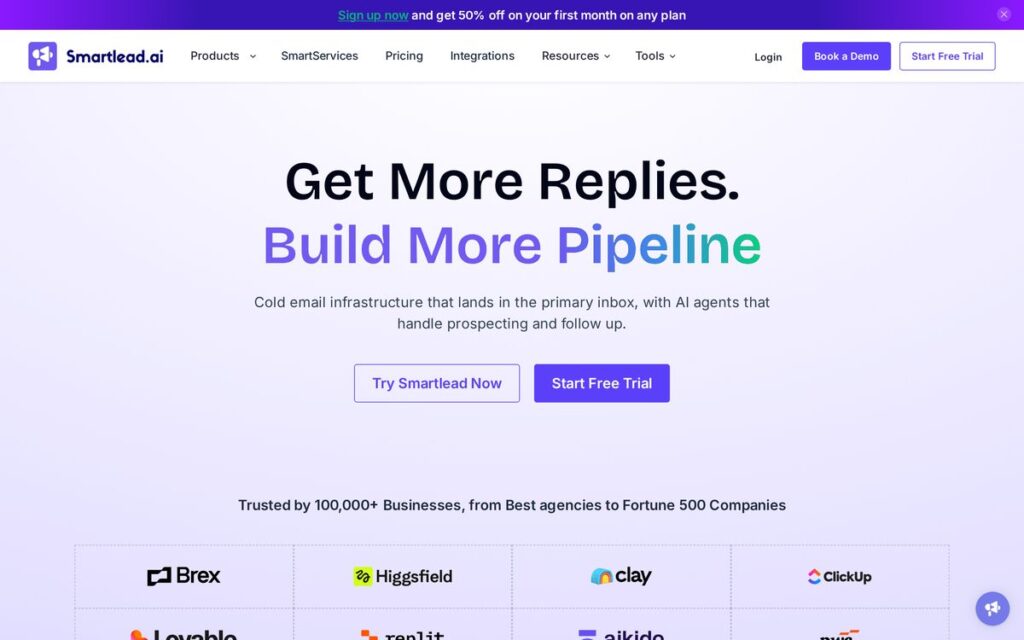
Smartlead is a cold email platform built for this kind of outreach. Its website describes unlimited mailboxes, automatic warm-up, sender rotation, SPF/DKIM/DMARC setup help, and a master inbox for replies. Its pricing page lists several plans (Base, Pro, Unlimited Smart, and Unlimited Prime) and a free trial; check current pricing on the official pricing page, as plans and offers change.
Affiliate link — we may earn a commission.
B2B lead generation tips for 2026
- Personalize with relevance, not flattery. Reference a real trigger: a new location, a job posting, a recent launch.
- Use AI to research and draft, not to spam. AI tools can speed up research and first drafts; a person should review every message.
- Measure replies and meetings, not just opens. Open tracking is less reliable than it used to be.
- Keep lists clean. Verify emails before sending to protect your domain.
- Follow up across channels. Email, LinkedIn, and a phone call together often beat any single channel.
- Review monthly. Double down on the channels producing meetings and pipeline.
Related guides
- How to Get Clients for a Digital Marketing Agency
- How to Generate Leads for a Small Business: 15 Proven Ways
- Best Cold Email Software in 2026: How to Choose
- How to Get Leads on LinkedIn for Free (Step by Step)
B2B lead generation strategies FAQ
What are the best strategies for generating B2B leads?
For small teams, a strong ideal customer profile plus targeted cold email, LinkedIn outreach, search-focused content, referrals, and fast follow-up is a reliable starting mix. Add webinars, events, and paid search as you grow.
What is the rule of 7 in B2B?
The “rule of 7” is an old marketing idea that a prospect needs to see or hear your message several times before acting. It is a rule of thumb, not a law, but it is a good reminder to plan multiple touches across channels.
Is cold email legal for B2B in the US?
Commercial email in the US is covered by the CAN-SPAM Act, which the FTC says makes no exception for B2B email. Follow its requirements, such as accurate headers, honest subject lines, a postal address, and an easy opt-out. This is not legal advice.
How many B2B leads should a small team aim for?
There is no universal number. Work backward from your revenue goal, average deal size, and close rate to estimate how many qualified meetings you need each month.
Need more qualified B2B leads?
We help small B2B teams build targeted outbound, SEO, and paid search programs that create real pipeline. Get a free marketing audit to see where to start.