

To set a marketing budget for a small business, start from your revenue goal and margins, estimate what it costs to win a customer, and work backward to a monthly number you can sustain. Then split it between proven channels and a small test budget, track results monthly, and adjust. There’s no universal “right” percentage — the right budget is the one tied to your goals and your numbers.
This guide walks through three practical ways to set a small business marketing budget, a worked example, how ad platforms actually spend your money, and the costs owners often forget.
Why a Marketing Budget for a Small Business Matters
Without a budget, marketing spending tends to swing between “nothing” when you’re busy and panic spending when things slow down. The SBA recommends including a complete breakdown of the costs of your marketing plan, being as accurate as possible, and continuing to track costs once the plan is in action. It also suggests comparing marketing costs to the revenue they generate so you know you’re getting a positive return on investment (ROI).
3 Ways to Set a Small Business Marketing Budget
1. Percentage of revenue
Many businesses set aside a fixed share of current or projected revenue for marketing. It’s simple and scales with the business. The percentage you choose should reflect your margins, growth goals and how competitive your market is — a new business trying to grow fast usually needs a bigger share than an established one living on referrals.
2. Goal-based (objective and task)
Start with the result you want, then price out what it takes. For example: how many new customers do you need this quarter, how many leads does that require, and what does each lead cost in your channels? This method takes more work, but it ties spending directly to outcomes.
3. Test-and-scale
If you have little data, set a small fixed test budget per channel for a set period, measure cost per lead and cost per customer, then move money into what works. This is often the most practical method for brand-new businesses.
| Method | How it works | Pros | Cons |
|---|---|---|---|
| Percentage of revenue | Fixed share of revenue | Simple, predictable | Ignores goals; can underfund growth |
| Goal-based | Work backward from targets | Tied to results | Needs data on costs per lead |
| Test-and-scale | Small tests, then scale winners | Low risk, learns fast | Slower to reach full volume |
Marketing Budget for Small Business Example
Here’s a hypothetical goal-based example to show the math. The numbers are illustrative, not benchmarks — use your own.
- Goal: 20 new customers per month.
- From past data, about 1 in 5 qualified leads becomes a customer, so you need 100 leads per month.
- Your current cost per lead from ads is about $40.
- Ad budget needed: 100 leads × $40 = $4,000 per month.
- Add tools, creative and management costs to get the full marketing budget.
If the result is more than you can afford, adjust the inputs: improve your close rate (faster follow-up, better offers), lower cost per lead (better targeting and landing pages), or set a smaller goal for now.
How to Split Your Budget Across Channels
A popular guideline is the 70/20/10 split: roughly 70% on channels that already work, 20% on promising channels you’re expanding, and 10% on experiments. It isn’t an official standard, but it keeps you from betting everything on untested ideas.
Typical line items to include:
- Advertising budget: Google Ads, Meta (Facebook and Instagram) ads, local directories.
- Website and SEO: hosting, updates, content and technical fixes.
- Tools and software: CRM, email marketing, scheduling, design and reporting tools.
- Creative: photos, video, design and copywriting.
- People: freelancers, agency fees or staff time.
- Local and offline: events, sponsorships, printing.
- Free channels that still cost time: a Google Business Profile is free, but posting and replying to reviews takes effort.
Adjust Your Budget to Your Business Stage
- Just launching: expect to spend more relative to revenue while you build awareness, reviews and a customer base. Lean on test-and-scale.
- Growing: use a goal-based budget tied to how many customers you can actually serve. Don’t buy more leads than your team can handle.
- Established: protect what works, keep a small experiment budget, and invest in retention — bringing past customers back often costs less than finding new ones.
Seasonality matters too. If most of your sales happen in a few months, plan to spend more just before and during those months, and less in the quiet season.
How Ad Platforms Spend Your Advertising Budget
Knowing how platforms handle daily budgets helps you avoid surprises on your bill.
Google Ads
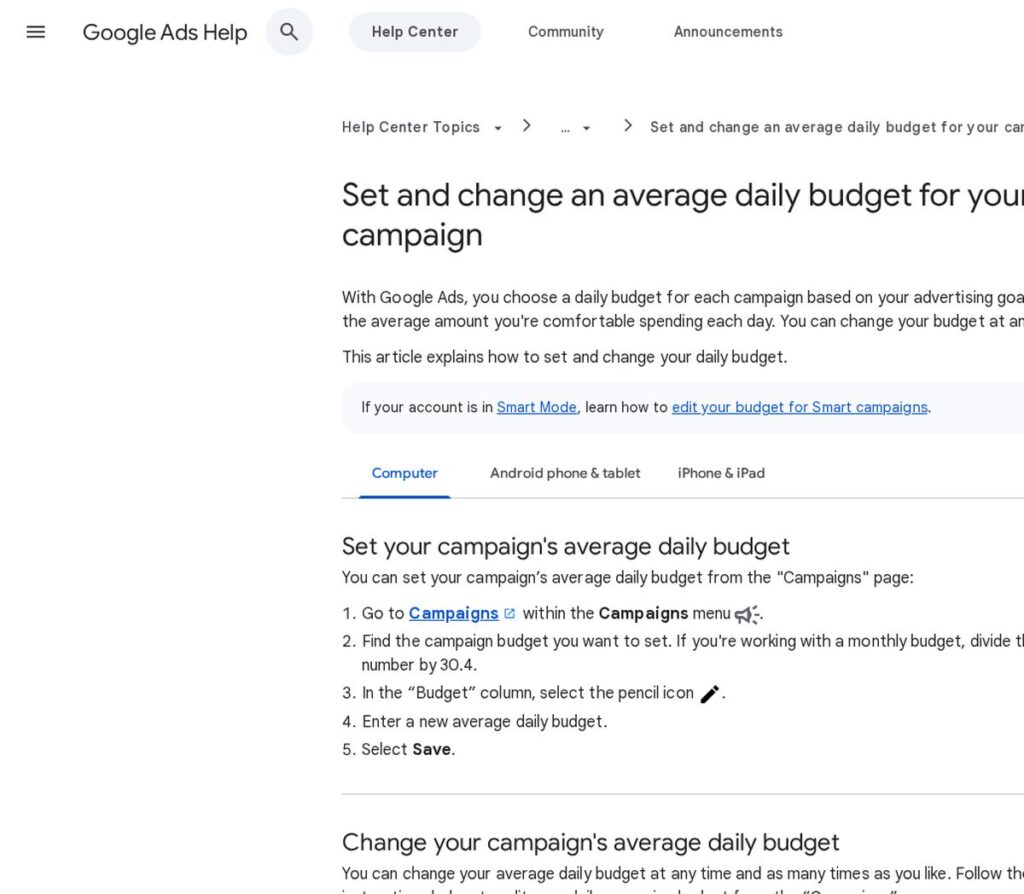
With Google Ads, you choose an average daily budget for each campaign and can change it at any time. Google’s help center says that if you’re working from a monthly budget, divide it by 30.4 to get the daily amount. So a $1,000 monthly campaign budget works out to about $33 per day.
Meta (Facebook and Instagram) ads
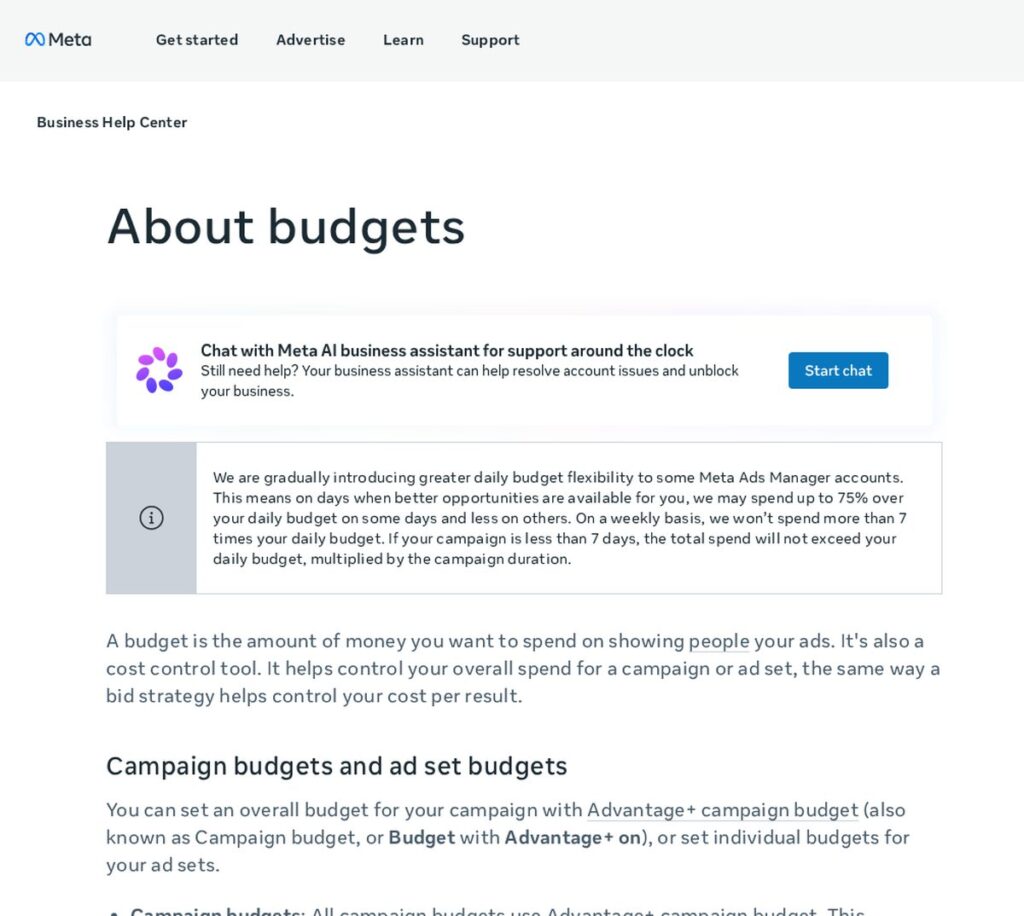
Meta explains that a budget is both the amount you want to spend and a cost control tool. It is introducing more daily budget flexibility for some accounts: on days with better opportunities it may spend up to 75% over your daily budget, and less on other days, but it won’t spend more than 7 times your daily budget in a week. Plan your monthly cash flow with that flexibility in mind.
| Platform | Budget type | Key point from the official help page |
|---|---|---|
| Google Ads | Average daily budget per campaign | Monthly budget ÷ 30.4 = daily budget |
| Meta Ads | Daily or lifetime budget | Some days up to 75% over daily; weekly cap of 7× daily |
Marketing Costs Small Businesses Often Forget
- Setup fees for tracking, landing pages or CRM.
- Usage-based charges for texting, calling or email sends.
- Creative refreshes when ads get stale.
- Software you stopped using but still pay for.
- Your own time — the most expensive line item of all.
Review subscriptions every quarter. Our list of digital marketing tools for small businesses can help you pick tools that cover several jobs at once.
Track and Adjust Monthly
Each month, compare spend to results by channel: leads, customers and revenue. Cut or fix channels that don’t pay back, and move budget to the ones that do. The SBA suggests maintaining your plan at least annually; reviewing your budget monthly keeps it honest.
Related guides
- How Much Do Digital Marketing Agencies Charge Per Month?
- Marketing Plan for a Small Business: Example and Simple Template
- Facebook Ads for Small Business: A Beginner’s Guide for 2026
Marketing Budget for Small Business FAQ
What is a reasonable marketing budget for a small business?
It depends on your margins, goals and competition. Many owners use a percentage of revenue as a starting point, then refine it with a goal-based estimate built from their own cost per lead and close rate.
What is the 70/20/10 rule in marketing?
It’s a guideline for splitting a budget: about 70% on proven channels, 20% on promising ones and 10% on experiments. Adjust it to your situation.
How much should a small business spend on advertising?
Start with what it costs to win a customer in your market and what a customer is worth to you. Spend enough to get meaningful data, then scale channels where the return is positive.
What is the 3-3-3 rule for marketing?
There’s no single official definition; it’s used for simple focus frameworks, like three audiences, three messages and three channels. For budgeting, the takeaway is to fund a few channels properly rather than spreading money thin.
Get More From Every Marketing Dollar
Not sure if your budget is in the right places? get a free marketing audit from ScaleMyClick. We’ll look at where your spend goes and where it could work harder, including Google Ads management.